Google Inc. on Monday unveiled several new Internet-search advances, including ways to find information by taking a photo and results that stream on to a Web page continuously, as it attempts to fend off Microsoft Corp. and other new competitors.

Search-engine giant Google unveils new technology that enables it to incorporate user updates from social Web sites into its results. WSJ's Jessica Vascellaro and Julia Angwin join the News Hub to discuss.

One advance will incorporate more real-time search results—content that hit the Internet in the preceding seconds—into Google's standard search-results page.

The moves are the latest sign of the escalating battle between the Silicon Valley Internet giant and Microsoft, whose Bing search engine has gained market share and won credibility for the software company in a field that Google dominates.

As Bing and start-ups such as Twitter Inc. and Facebook Inc. attract more buzz, Google is pushing hard to convince users that it is still on the cutting edge of Web innovation and that the search market has plenty of room to grow.

One of the hottest topics is finding ways to bring relevant information to users faster, sometimes without even refreshing their Web pages.

Microsoft in October announced a search service that shows relevant results from Twitter and said it plans to incorporate some public content users share with the social-networking site Facebook, too.

Now, Google, of Mountain View, Calif., is trying to go a step further by having the new results appear automatically, without refreshing the page.

Associated Press

Google employees demonstrate new search features on Monday.

While looking at a search-results page for "weather in New York," for example, consumers could see a tweet from a user standing in Central Park saying it just started to snow.

Google, which previously announced that it had struck a deal to include results from Twitter, said Monday that it will also pull in some information from Facebook and MySpace.

MySpace is owned by Wall Street Journal owner News Corp.

One new service the search engine is banking on is Google Goggles, which allows users to pull up information about a landmark or a product by taking a picture of it from a cellphone instead of typing in a related query.

Showing off the service Monday, Google executives painted it as the way to bridge the physical and digital worlds by allowing users "to search with their eyes."

Google

Google added real-time results from Twitter and other sources to its search service.

The service is only available currently for cellphones running certain versions of Google's Android software.

Vic Gundotra, a Google vice president of engineering, said the service aims to "visually identify any image over time" merely by pointing a mobile device to it.

"We are really at the beginning of the beginning."

Google also showed off improvements to an existing voice-search service that shows results based on queries users speak into their phones.

The service works in Mandarin, Japanese and English, allowing users to say the name of a restaurant and within seconds see a map and address, for example.

—Scott Morrison contributed to this article.

Write to jessica e. vascellaro at jessica.vascellaro@wsj.com

soucre: wsj.com

»»  read more

For users, targeted advertising has always walked a thin line between being useful and creepy. This is due in no small part to the fact that advertisers need to see people's surfing habits before they can, well, target them. Yahoo has decided to head off some of that privacy-related criticism by launching a new tool that allows users to see how they're being targeted and lets them control control various elements of the process.

Called "Ad Interest Manager," users are able to see which categories they have been earmarked for based on their searching and browsing history. From here, they can turn certain categories on or off manually, and even opt out of the targeted advertising service altogether (though it might be more preferable if it was opt-in).

Users can also see what their own histories are like from Yahoo's perspective so they can understand better how the ads are being targeted.

The tool itself isn't very complex, and that's obviously the point. In its announcement, Yahoo said that it hoped to add transparency to its advertising focus and make it simple for users to understand what was going on and make changes. "With the introduction of Ad Interest Manager, users can not only get a better understanding of how the process works, but they can also communicate better with Yahoo! and our advertisers about what most interests them," Yahoo's David Zinman said in a statement.

Yahoo's timing is surely no accident—as noted by Kara Swisher, today also marks the beginning of a three-day privacy roundtable held by the Federal Trade Commission. Some specific focuses of the roundtable include, of course, the mix of search and advertising and how it affects users (especially when two of the three major players decide to combine interests in that area).

To that end, Yahoo wants to show that it's paying attention and wants users to feel at ease with the level of information being shared with advertisers. The Ad Interest Manager does set Yahoo apart from others (*cough* Google) by letting users control granular details of the targeted advertising process, though it's safe to assume that the other major players will eventually catch up with similar tools.

soucre: arstechnica

»»  read more

Dec. 7 (Bloomberg) -- The Obama administration expects the cost of the Troubled Asset Relief Program to be $200 billion less than projected, helping to reduce the size of the budget deficit, a Treasury Department official said yesterday.

The administration forecast in August that the TARP would ultimately cost $341 billion, once banks had repaid the government for capital injections and other investments. Congress authorized $700 billion for the program in October 2008.

Banks have paid back $71 billion so far, and a planned repayment by Bank of America Corp. would bring that figure to $116 billion. Treasury Secretary Timothy Geithner said in an interview last week that he expects the TARP to get as much as $175 billion in repayments from banks by the end of 2010.

“The fact that they are spending less TARP money means that recovery is better and stronger than expected, and that’s all positive for growth,” said Mitul Kotecha, Hong Kong-based head of global foreign-exchange strategy at Calyon, the investment banking unit of France’s Credit Agricole SA. “It shows that things are progressing in the right direction.”

The financial bailout program, begun under President George W. Bush, has drawn fire from critics in Congress who say the government has done more to help Wall Street banks than average Americans. Last month Republican Representative Kevin Brady of Texas told Geithner he should resign during a hearing of the Congress’ Joint Economic Committee.

Create Jobs

House Speaker Nancy Pelosi, a California Democrat, said last week that legislation is being written to use some TARP funds to help local communities and small businesses.

Pelosi said TARP funds would be “appropriately used” to pay for new jobs promotion programs because “the more jobs we create the more money comes back into the public till” as tax revenue that will “reduce the deficit.”

House Republican Leader John Boehner said Geithner should shut down the financial bailout program and use money left in the fund to reduce government debt.

The U.S. budget deficit reached a record $1.42 trillion in the 2009 fiscal year that ended Sept. 30 as the government spent money on stimulus programs to pull the nation out of the worst recession since the 1930s and tax revenue declined.

“The deficit is definitely a concern that’s overhanging the dollar, there’s no doubt,” said Calyon’s Kotecha. “But there is a long way to go before the deficit improves to a point where concerns completely recede. On the margin, it’s good news for the dollar but I don’t think we will see a huge impact off this news.”

Turning a Profit

The yield on the benchmark 10-year Treasury note was little changed at 3.47 percent as of 7:50 a.m. in London, according to BGCantor Market Data.

The trade-weighted Dollar Index fell 0.4 percent to 75.604 as of 7:55 a.m. in London from 75.911 in New York late last week. The index tracks the U.S. currency against the euro, yen, U.K. pound, Canadian dollar, Swiss franc and Swedish krona.

The Treasury invested about $245 billion last fiscal year into U.S. banks to shore up the financial system. In the long run, those investments are expected to turn a profit of $19 billion, compared with a previous estimate of a $76 billion cost, the Treasury official said yesterday.

The government’s net cost for its investments in banks, auto companies and insurers came to $42 billion last fiscal year, the official said, about $110 billion less than projected in August.

‘Not Good Enough’

The Treasury official said the TARP should be judged on the basis of its effects on the financial system, and not its cost.

The U.S. economy expanded for the first time in a year in the third quarter, growing at a 2.8 percent annual rate. The Standard and Poor’s 500 Financials Index has jumped 140 percent since March 6, and the cost of three-month dollar loans in London between banks fell to 0.257 percent on Dec. 4 from 1.41 percent at the beginning of the year.

Employers cut 7.2 million jobs since the recession began in December 2007. Payrolls fell by 11,000 workers in November, the smallest decline in 23 months, figures from the Labor Department showed last week. The jobless rate declined to 10 percent, from a 26-year high of 10.2 percent in October.

Geithner, in last week’s interview, said the decline in job losses was “progress, but not good enough.”

As banks repay their TARP funds, the Treasury is disposing of the stakes it acquired through the program. To exit TARP, and the additional oversight it brings, banks must buy back the government’s preferred shares and also agree on how to dispose of warrants the Treasury received as part of the deals.

Goldman Sachs Group Inc. redeemed its warrants for $1.1 billion, while JPMorgan Chase & Co., Capital One Financial Corp. and TCF Financial Corp. have opted to let the Treasury auction their warrants. That process is now under way.

To contact the reporter on this story: Rebecca Christie in Washington at rchristie4@bloomberg.net;

»»  read more

The white knights that came to the rescue of banks during the financial crisis are going home, with their pockets full of bounty from their good deeds.

In less than two years, many of the biggest overseas government investment funds, known as sovereign wealth funds, have reaped huge gains from bailing out financial institutions, and in turn, the global financial system.

In the latest announcement, Kuwait’s sovereign wealth fund said on Sunday that it had booked a $1.1 billion profit on the stake it took in Citigroup in January 2008. That equals a 37 percent annualized return on its initial $3 billion investment. Other sovereign wealth funds — including those backed by the governments of Singapore, Qatar and Abu Dhabi — have also recently cashed out stakes in foreign banks for comparably large gains.

The hefty returns highlight how some savvy government funds have been able to profit from the financial crisis, even as most ordinary investors have been pummeled by billions of dollars of losses. It also calls into question whether such funds will act as long-term investors, as many initially suggested, or merely short-term profiteers.

Many sovereign funds invested in the early days of the crisis as banks scrambled to find investors willing to plow in money and exacted lucrative terms. (Swings through Asia and the Middle East were so common that bankers coined the phrase “Shanghai, Mumbai, Dubai, Goodbye” to describe their fund-raising tours.)

But as financial stocks continued to plummet last year, the so-called smart money supplied by foreign governments no longer looked so sure. Now, as bank shares have rebounded faster than most analysts had projected and governments face internal political pressure at home, the funds are racing to lock in gains.

“They didn’t panic into selling at the bottom of the market,” said Mohamed El-Erian, chief of Pimco. “And now they can sell.”

GIC, an investment arm of Singapore’s government, said in September that it turned a $1.6 billion profit by selling about half of its stake in Citigroup.

In June, the International Petroleum Investment Company, which is wholly owned by the Abu Dhabi government, said it would sell a big part of its investment in the British bank Barclays, making a profit of roughly £2 billion on a £2 billion investment. In October, the Qatar sovereign wealth fund said it was selling a part of its stake in Barclays, also at a healthy profit.

Mr. El-Erian said data was limited on the specifics of how the big sovereign wealth funds have fared through the crisis. Norway, one of the few such funds that provides regular data and has invested in financial firms through its general financial investments, has reported that it is having a strong year.

The great unraveling by foreign governments may put additional pressure on the United States government to begin exiting its bank investments, too.

Bank of America said last week that it expected permission from regulators to soon repay the $45 billion in taxpayer money it received. Citigroup, in which the government holds $20 billion of preferred shares and nearly a 34 percent ownership stake, has made paying back the government a priority but has not reached a deal with the Treasury Department for repayment.

Of course, not every bank investment has been a winner. The China Investment Corporation saw its $3 billion investment in the Blackstone Group turn south, especially after the firm’s initial public offering did not perform well.

Temasek Holdings, another sovereign wealth fund backed by the government of Singapore, replaced its leadership team and overhauled its investment strategy after big bets on Barclays and Merrill Lynch did not pan out. The Abu Dhabi Investment Authority has had a similar experience with its early investment in Citigroup.

Still, the decision by the Kuwait Investment Authority to sell its stake in Citigroup came as somewhat of a surprise. It invested about $3 billion in Citigroup in January 2008 alongside other prominent investors, including Adia, the GIC, the New Jersey Division of Investment, and Citigroup’s founder, Sanford I. Weill. Around the same time, the authority put $2 billion into Merrill Lynch, the troubled brokerage house taken over by Bank of America last year.

In September, the Kuwait Investment Authority said that it had no immediate plans to sell its investments in Citigroup or Bank of America because its financial strategy was based “on a long-term vision.”

The government investment fund had agreed to convert its preferred shares of Citigroup into common stock. But on Sunday, it announced that it had sold that stake for about $4.1 billion, producing the $1.1 billion gain.

Citigroup’s ordinary shareholders, however, have not fared as well during the last two years. The company’s stock was trading above $25 a share in January 2008 when Kuwait took its stake; it is now trading at about $4 a share.

Graham Bowley contributed reporting.

soucre: nytimes

»»  read more

Laptop keyboard (Image: PA)
Experts warn that universities' e-mail systems are vulnerable to attacks

Sir Muir Russell will head an independent review into the e-mails leaked from the Climatic Research Unit (CRU) in Norwich, UK.

Sir Muir, a former civil servant, will look into allegations that have arisen from the security breach.

The review will examine whether there is evidence of manipulation or suppression of data "at odds with acceptable scientific practice".

The CRU is based at the University of East Anglia (UEA).

The e-mails issue arose two weeks ago when hundreds of messages between scientists at the CRU and their peers around the world were posted on the world wide web, along with other documents.

It appears that the material was hacked or leaked; a police investigation has yet to reveal which.

CRU maintains one of the world's most important datasets on how global temperatures have changed.

Professor Phil Jones, director of the unit, has stepped down pending the review, and has said he stands by his data.

At the time that the theft of the data was revealed, some climate sceptic websites picked up on the word "trick" in one e-mail from 1999 and talk of "hiding the decline".

Professor Jones said the e-mail was genuine but taken "completely out of context".

He added: "The first thing to point out is that this refers to one diagram - not a scientific paper.

"The word 'trick' was used here colloquially as in a clever thing to do. It is ludicrous to suggest that it refers to anything untoward."

UEA has said the review will:

  • Examine e-mail exchanges to determine whether there is evidence of suppression or manipulation of data at odds with acceptable scientific practice which "may therefore call into question any of the research outcomes".
  • Review CRU's policies and practices for acquiring, assembling, subjecting to peer review and disseminating data and research findings, and "their compliance or otherwise with best scientific practice".
  • Review CRU's compliance or otherwise with the UEA's policies and practices regarding requests under the Freedom of Information Act (FOIA) and the Environmental Information Regulations (EIR) for the release of data.
  • Review and make recommendations about the management, governance and security structures for CRU and the security, integrity and release of the data it holds.

Sir Muir commented: "Given the nature of the allegations it is right that someone who has no links to either the university or the climate science community looks at the evidence and makes recommendations based on what they find.

"My first task is to scope the project, gather the information I need and source the additional expertise that will be required in order to investigate fully the allegations that have been made."

In another development, Saudi Arabia's chief climate negotiator, Mohammad Al-Sabban said that the CRU e-mail issue will have a "huge impact" on next week's UN climate summit.

Mr Al-Sabban made clear that he expects it to derail the single biggest objective of the summit - to agree limitations on greenhouse gas emissions.

"It appears from the details of the scandal that there is no relationship whatsoever between human activities and climate change," he told BBC News.

"Climate is changing for thousands of years, but for natural and not human-induced reasons."

Bob Ward, policy and communications director at the Grantham Research Institute on Climate Change and the Environment, welcomed the appointment. But he said: "One concern is that the results may not be published until the Spring.

"This is probably necessary to allow a thorough investigation, but it does mean that those who are using 'climategate' as a propaganda tool for their own political ends might be able to enjoy many more weeks of mischief-making.

"The big question is whether so-called 'sceptics' will complain because the investigation will not be headed by one of their own, and whether they will suspend their campaigns of disinformation about this affair until the investigation is completed."

UEA has asked for the review to be completed by the Spring of 2010 and this will be made public along with the university's response.

soucre:bbc

»»  read more


Intel Drops Larrabee GPU Plans

Intel has announced that it will dump its plans to launch discrete GPU codenamed Larrabee. As of now, both AMD and Nvidia will be happy to hear that no consumer version of Larrabee graphics chips would be out. Intel spokesperson Nick Knupffer justified this move by stating that Larrabee's silicon and software development was lagging behind than where it was assumed to be at this point in the project.

ATI's new Evergreen family of Radeon HD 5000 series graphics cards is being pointed to have destroyed Intel's plans. The all new dual-GPU on single PCB (printed circuit board) based ATI Radeon HD 5970 boasted of beastly over 5 teraFLOPS (teraFLOPS is one trillian Floating point Operations Per Second). While Intel's Larrabee was supposed to feature two teraFLOPS of performance and would never would make up to that performance at low price point.

Hence, Intel decided not to launch an uncompetitive product while the counterparts are already leading. However, Intel plans to release Larrabee product as software development platform for high performance computing and graphics development segments. At the recent Intel Developer Forum 2009, a ray tracing demo over Larrabee was shown and this shows that when out, Larrabee can be used for gaming-graphics development.

ATI is leading with DirectX 11 supporting hardware graphics race at the moment and Nvidia aims to launch its Fermi architecture GPUs. Apart from that, AMD is pulling up sleeves to launch its ambitious project Fusion that crams GPU with CPU on the same die. AMD Fusion is expected to arrive in mid 2011.

soucre: .techtree
»»  read more

Apple has acquired struggling streaming music service Lala, an Apple spokesman told CNET News on Sunday.

Apple spokesman Steve Dowling confirmed the acquisition but did not disclose the terms of the deal or what the company intends to do with the 4-year-old Lala. The company scans users' hard drives and creates a duplicate music library that owners can access from Web-enabled devices. The company also sells songs for a dime each.

CNET News reported Friday that Apple was close to finalizing the sale and that one of the reasons Apple was interested in acquiring Lala is to obtain some of the company's payment and fulfillment systems, which a source with knowledge of the talks said could save Apple money.

However, it's unclear whether Apple may also be planning to launch some kind of streaming-music or so-called cloud storage feature.

The New York Times reported that Apple was approached by Lala after the company concluded that reaching profitability was unlikely. All Things Digital reported that Lala was acquired for a sum that meant a loss for its investors.

If things keep going this way, pretty soon there won't be any digital music space to cover. Many of the players around a year ago are gone: Ruckus and SpiralFrog closed. MySpace is gobbling up iLike and soon Imeem. Apple got Lala.

The frontrunners now appear to be Pandora, Amazon, Spotify, MySpace Music, Last.fm (owned by CBS, parent company of CNET) and Zune's Marketplace.

To this point, not one of them has generated the kind of market share to challenge iTunes.

soucre: cnet

»»  read more

The battle between Microsoft Corp. and Google Inc. has shifted into new territory: a race to see who can make online maps that make people feel like they're really there.

After lagging behind Google Maps, Microsoft this week unveiled an overhaul of its Bing Maps Web site that supplements the traditional bird's eye view of cities and other locations with rich photographs on the ground. In addition to the street-level images pioneered by Google Maps that let people "move" along the roads pictured, Microsoft's technology stitches together images uploaded by users into three-dimensional photo collages. The technology, called Photosynth, lets users post on Bing Maps interior shots of everything from restaurants to museums to hotels.

Microsoft Corp.

Microsoft's new program lets users upload photos to Bing Maps, such as this picture of a gallery inside New York's Metropolitan Museum of Art.

The Microsoft technology and similar efforts by Google are further signs that online maps are evolving from a digital version of an atlas into something more akin to a videogame. Both Microsoft, based in Redmond, Wash., and Google, Mountain View, Calif., are experimenting with a variety of tools that make hunting for locations far more immersive.

Having better maps gives Microsoft and Google more than just bragging rights. It also potentially gives companies who use their Internet maps—such as hotels and restaurants—a new tool for attracting business and standing out from competitors.

"Bing has pushed what Google was doing a step forward," says Greg Sterling, an analyst with Sterling Market Intelligence.

John Hanke, vice president of Google maps, said Microsoft is playing "catch up" with most of its new map features, pointing out that Google also lets people post images that show up in Google maps in the locations they were shot.

The photo collages on Bing, which Microsoft calls "synths," go beyond ordinary panoramic images that allow people to pivot around a street scene from a single fixed point. Users can create the synths with a conventional digital camera by snapping dozens or even hundreds of shots of the interior of, say, a furniture store, from a variety of vantage points.

Consumers can then use a free program from Microsoft that stitches the images together in such a way that they can experience a crude simulation of moving around inside the store by clicking around the photo collage with their mouse. Anybody can then make the synth accessible through Bing Maps, represented by a pin icon on the spot where the images were shot.

On the new test version of Bing Maps, a search for the Metropolitan Museum of Art in New York calls up an aerial shot of the museum, from which people can swoop down to a view of the facade of the building from 5th Ave. Microsoft's Bing street view images, as with Google, are taken by company-hired vehicles outfitted with an array of cameras that shoot 360-degree images as the driver cruises around a city.

The outside of the museum on Bing Maps is also festooned with green icons, which people can click to view nearly a dozen synths of the Greek and Roman section and other exhibits, allowing a viewer to examine artwork from different angles and to zoom in on details.

Bill Garrison, a Seattle real estate agent, posted a synth of a property he is selling in the city after a friend at Microsoft helped him shoot the pictures. The synth lets a viewer travel through the home, even allowing a peek at the view through a kitchen window from different angles.

Mr. Garrison says the synth is "much better" than traditional photo panoramas but says the images download too slowly for most house hunters to tolerate. "If it could just be smoothed out and speeded up," he says.

Blaise Aguera y Arcas, chief architect of Bing Maps, said the performance of the synth feature will be improved. Although Microsoft hasn't formally begun approaching businesses to do synths of their establishments, he predicts 3D interior shots will eventually "come to be expected" by customers who research restaurants and other places online. Microsoft believes the synth feature is easy enough for amateurs to use.

There are already companies like EveryScape Inc. that specialize in photographing the interior of hotels and other businesses to create immersive images for Web users. Rebecca MacQuarrie, director of marketing at EveryScape, said she wasn't familiar with Bing's new synth technology but believes most businesses will favor its professionally photographed environments.

»»  read more

Google's expanding its grasp on the Internet with a newly revealed DNS resolving service. Google Public DNS, announced Thursday on Google's blog, will offer you an alternative way to connect to Web sites.

As with the launch of most Google services, people are starting to ask questions about what kind of data will be collected and how exactly it will be used. (Or, in more lay terms, "Is Google going to be evil?") Here are some straight-forward answers, straight from the source.

Google Public DNS: An Introduction

First, a brief description of what exactly Google Public DNS is: In a nutshell, the DNS -- or domain name system -- is what actually finds and directs you to a Web site when you type in its URL. You input "pcworld.com," the system translates that into the matching numerical address of PC World's server, and you're taken to the page. That's the simple explanation, anyhow.

For most users, DNS lookups are handled automatically through an Internet service provider; they're not tasks most of us see or devote much thought to. You do have the option, however, of using your own third-party DNS resolver. That's where Google Public DNS comes in.

The advantage of using a system such as Google's is that it can be faster, more efficient, and more secure than the default ISP alternatives. Companies such as OpenDNS already offer such functionality. As OpenDNS founder David Ulevitch points out, Google Public DNS will not offer the ability to filter content and customize the experience in the same way that a pay-to-play service does.

Google Public DNS and Your Privacy

Okay, that's out of the way -- now let's tackle the all-important question of privacy. What exactly will Google be watching with its new Google Public DNS service?

Here's the breakdown of what is and isn't collected:

• Your IP address: yes. But only temporarily. That data, Google says, is never stored for more than 24 to 48 hours, and it's collected solely to identify technical problems and help protect from attacks.

• Your name or other personally identifying information: no. Google assures this type of data is never collected.

• Your location: yes. Google says it permanently stores "metro-level" info on your whereabouts for the purpose of debugging and improving the Google Public DNS experience. Most of this information is held for two weeks, Google says, though a "small subset" is sampled for permanent storage. The company promises that it never ties the location data to any other information collected from your session.

• The Web sites you look up: yes. But again, Google says that information is not stored along with any data that would identify who you are.

• Lots of technical details: yes. Google Public DNS permanently logs technical items such as your request type, transport protocol, and the length of time it takes the system to complete your requests. You can see a full list of these technical details on Google's official Public DNS privacy policy.

None of the information collected, Google says, is ever tied to your Google account, stored as part of your profile on any other Google service, or shared with any third-party provider.

Google Public DNS and Advertising

One last concern: What about ads? Is Google going to be inserting sponsorships into your surfing experience?

So far, there are no indications that it will. Typically, with DNS resolvers, ads appear when users try to go to a Web page that can't be found; at that time, a custom error page will pop up that features sponsored banners or text links. The FAQ for Google Public DNS, however, states the following:

"If you issue a query for a domain name that does not exist, Google Public DNS always returns an NXDOMAIN record, as per the DNS protocol standards."

Now, with that being said, some people still have their doubts. OpenDNS's Ulevitch, for example, believes a deeper motive may exist.

"You have to remember they are also the largest advertising and redirection company on the Internet," he says. "To think that Google's DNS service is for the benefit of the Internet would be naive. They know there is value in controlling more of your Internet experience, and I would expect them to explore that fully."

soucre: pcworld.com

»»  read more

Brian Roberts became Comcast's president when he was 30.


Comcast's deal to buy a controlling stake in NBC Universal has kicked off a vigorous debate: Will it change news and entertainment for the better?

Comcast CEO Brian Roberts says his company will "enhance consumer choice and accelerate the development of new digital products."

But Consumers Union policy analyst Joel Kelsey says the deal "will lead to higher prices and fewer independent sources of information."

Who's right? Federal regulators likely will take about a year to study that before deciding whether to approve the deal. Here's a first look at some issues that will be raised:

Q: As the No. 1 cable operator, doesn't Comcast have an incentive to turn NBC and Telemundo into national cable channels?

A: Federal regulators wouldn't approve the deal if they thought that millions of people would lose free TV.

Not surprisingly, Comcast says it will continue to broadcast the networks over-the-air from company-owned TV stations and independent affiliates. It also says that it will "preserve and enrich" local news, sports and public affairs shows, although it offered few details.

Q: What impact could the new arrangement have on the development of new television services?

A: Comcast is a big proponent of interactive TV. It could help that cause by scheduling shows that give viewers opportunities to vote, or selling ads that enable people to learn more about the product by clicking a button on the remote control.

Q: Could Comcast keep NBC's popular cable channels or big event programs, including the Olympics, away from competitors such as DirecTV, Dish Network, Verizon's FiOS or AT&T's U-verse?

A: In similar deals in the past, such as News Corp.'s 2003 purchase of DirecTV, federal regulators insisted that the companies make firm promises not to discriminate. Comcast likely will face the same requirement. Senate Antitrust Subcommittee Chairman Herb Kohl, D-Wis., has said that he will hold a hearing to examine the deal and try to "preserve robust competition."

Q: NBC offers TV shows for free on the Internet, including at Hulu.com, where it's a major partner. Will Comcast change that?

A: NBC Universal chief Jeff Zucker says that Hulu is already thinking about charging for some programs. Comcast COO Stephen Burke says his company has "no grand plan" for Hulu but wouldn't necessarily oppose a free service. Cable operators want to be sure that only people who subscribe to their services, or to satellite, can see shows from cable channels for free on the Internet.

Q: Comcast wants hit movies for its video-on-demand service. Will it push Universal Pictures to hurry movies to cable, even if it means sacrificing DVD sales or angering movie theater owners?

A: That's a possibility. Roberts says that "on demand could play a big role in the future of Hollywood." For example, by releasing a film at the same time on DVD and VOD, "you could have another marketing event" a few months after the premiere at movie theaters.

Q: How do we know that Comcast won't try to influence newscasts at NBC, Telemundo and MSNBC– or the business reporting at CNBC?

A: It's difficult to insulate a newsroom from the views at the top. But Comcast says that it will respect the operations' editorial independence. It will turn any questions that arise over to the NBC News ombudsman, a position created by GE after it bought NBC in 1986.

soucre: usatoday

»»  read more

People walk past a Bank of America branch in New York August 13, 2009. REUTERS/Lucas Jackson

NEW YORK (Reuters) - Bank of America Corp sold more than $19 billion of equity on Thursday amid strong investor interest as it races to shed government regulatory curbs that have bedeviled its CEO search.

The money raised will help repay $45 billion in government bailout funds the bank took at the height of the financial crisis as it struggled with heavy writedowns stemming from its acquisitions of mortgage lender Countrywide and investment bank Merrill Lynch.

The bank had previously said it planned to sell securities next Monday, but moved the sale forward because of demand. The size of the deal grew to $19.29 billion of common equivalent securities, from an originally planned $18.8 billion, according to a pricing document sent to investors and obtained by Reuters.

The securities sold at $15 each, about 5 percent below where Bank of America shares closed on Thursday. The securities will convert to common stock once equity investors approve an increase in authorized Bank of America shares. The bank's shares fell to $15.58 in aftermarket trading.

The offering is the biggest yet in a year that has seen at least 100 U.S. banks sell stock to strengthen their capital as they sustained losses from mortgages, credit card debt and business loans.

Chief Financial Officer Joe Price said on a conference call with investors the bank was seeing signs of credit stabilization and that managed losses on credit cards had plateaued.

"Consumers continue to experience stress ... however we are seeing signs of stabilization," Price said.

ASSET SALES PLANNED

The bank also plans to sell $4 billion of assets as part of its plan to repay the funds borrowed under the Troubled Asset Relief Program, Price said on the call. The bank is looking at assets to sell, and to the extent it does not shed assets, the bank will issue more shares.

Repaying the money helps the bank's search for a successor to Chief Executive Kenneth Lewis by reducing government involvement, analysts said. Lewis is due to retire at the end of the year.

In testimony before a Senate Banking Committee hearing on Thursday, Federal Reserve Chairman Ben Bernanke said Bank of America repaying TARP funds is "good news," adding that the real problems to the financial system have mostly been outside the bank holding companies.

But one top regulator cautioned that the government needs to be careful about letting big financial firms repay bailout money because there will not be more government support going forward. "I think, in general, they need to be very careful with it," said Sheila Bair, chairman of bank regulator the Federal Deposit Insurance Corp.

'AN INCREMENTAL POSITIVE'

Bank of America's surprise move to repay TARP funds may pressure rivals to follow suit, but many big banks may not rush to repay all the funds they borrowed.

Concerns about possible share dilution for other banks that may follow Bank of America's lead helped depress stock prices of PNC Financial Services Inc and Wells Fargo & Co, both cited as top candidates for TARP repayment.

PNC fell 6.4 percent to close at $52.89, while Wells Fargo fell 3.5 percent to close at $26.49. Bank of America shares rose 0.7 percent to close at $15.76 after earlier gaining as much as 6 percent.

A total of about 1.03 million option contracts changed hands in BofA, three times the average daily volume, according to option analytics firm Trade Alert.

"The full repayment of TARP is an incremental positive in the sense that it relieves the intense regulatory and political scrutiny tied to its receipt of government money," Credit Suisse analyst Moshe Orenbuch said in a note to clients on Thursday.

The equity offering listed Bank of America-Merrill Lynch and UBS AG's UBS Investment Bank as underwriters, according to a filing with the U.S. Securities and Exchange Commission.

(Reporting by Dan Wilchins)

(Additional reporting by Juan Lagorio, Doris Frankel, Chuck Mikolajczak, Lilla Zuill, and Elinor Comlay, Editing by Tim Dobbyn, Gerald E. McCormick and Carol Bishopric)

soucre: reuters

»»  read more


By Bloomberg News

Dec. 4 (Bloomberg) -- General Motors Co. will transfer a 1 percent stake in its China passenger-car venture to partner SAIC Motor Corp. while forming a new venture with the Shanghai-based company to sell low-cost vehicles in India.

GM agreed to transfer the stake in Shanghai General Motors Co. to SAIC, China’s biggest carmaker, the companies said in a joint statement today. The two companies also plan to form an equally controlled joint venture in the first quarter of next year to make and sell small cars and mini-commercial vehicles in India.

The India venture may help Detroit-based GM take a bigger share of the South Asian nation’s vehicle market while giving SAIC a foothold in the world’s second-most populous nation. Along with the stake sale, it signals a growing role for SAIC within the alliance, said Michael Dunne, president of consulting company Dunne & Co. in Hong Kong.

“It’s a declaration that SAIC is emerging as a power to be reckoned with, not only in China but now globally,” Dunne said. “Its ambition is to be a global carmaker.”

The transfer of a 1 percent stake in the China venture will help SAIC consolidate revenue from the company, “which will provide investors a clear understanding of its business,” the statement said, without disclosing terms of the transaction. The venture will continue to operate under the same management structure, it said.

The India venture will be based in Hong Kong and will use GM’s two manufacturing facilities and a powertrain plant in India, the statement said.

For Related News and Information: Top stories in India today: TOP INDIA Most-read auto stories: TNI AUT READ BN Stories on Indian Automakers: TNI AUT INDIA BN

soucre: bloomberg

»»  read more

(Credit: Jacques Gene)

Chances are good that someone on your shopping list is pining for an iPhone for the holiday season. If you know of such a person, then we've got a surprise Black Friday deal for you. AT&T is offering refurbished 16GB iPhone 3Gs for $49 for new customers. That's the shipped price, and they're even waiving the activation fee, normally $35.

The refurbished units have the same warranty as new units so you don't have to worry about getting someone junk. As an owner of a refurbished 3G I can attest to the quality of the devices.

Of course a two-year contract with AT&T's iPhone plan is required, but anyone who's asking for an iPhone probably already knows this. Currently, the 16GB black is out of s

soucre: cnet
»»  read more

App currently costs $1.99, but an old Microsoft policy may soon make it free.

By Kris Pigna, 11/29/2009

360LiveA new Xbox Live iPhone app is now available on the Apple Store that allows you to manage your Live account in just about every way you would possibly want to on the go -- from accepting friend requests to seeing which friends are online and sending them messages.

Called 360 Live, the app currently costs $1.99, but as Joystiq noted, that price may soon be reduced to free. Microsoft decreed back in August of 2008 that any Xbox Live-related app must be released free of charge, so it's likely the price for this app will be dropped once Microsoft has its say.

In the meanwhile, the app's main features -- as described on its website -- follow below.

  • Sign in securely using your Xbox Live credentials. 360 Live automatically retrieves your friends.
  • Complete Gamertags management. Add, remove, accept or reject pending requests.
  • An organized Friends List. Grouped by status (Online, Offline, etc.)
  • Gamer Profile and details including gamerscore, bio, location, country, gamercard, avatar, etc.
  • Check your friends' complete games history.
  • Compare locked and unlocked achievements per game and gamertag.
  • Send and receive messages. You can even send messages to multiple recipients!
  • Gamercard coverflow style carousel on landscape mode!

EDITORS NOTE: This app is not created by Microsoft so use proper precaution before entering your personal information in a third-party application.

soucre : 1up

»»  read more

New Push on Mortgage Relief

Posted by Admin | 6:05 PM | | 0 comments »

In the latest move to bolster its $75 billion foreclosure-prevention plan, the Obama administration on Monday will outline new efforts designed to increase the number of borrowers who receive mortgage relief.

The Treasury Department on Monday will announce plans to appoint officials to monitor the actions of the largest mortgage servicing companies on a daily basis. It also will announce it is requiring mortgage companies to develop and report to the administration their plans to increase the number of completed modifications, a Treasury spokeswoman said.

While more than 650,000 borrowers have been given trial mortgage modifications under the plan, few borrowers have received permanent modifications. Many borrowers complain that it is difficult to get a permanent fix even once they have made trial payments; some have been required to send in duplicate paperwork or even ended up further behind on their mortgage payments.

The Treasury won't release the number of completed modifications until December, but the spokeswoman said it is in the "tens of thousands." It is too early to know what portion of trial modifications will become permanent, she added.

The stakes for the economy of a successful modification program are high. To stop further home price declines, some economists argue that the share of home sales that are foreclosures and other distressed properties must remain stable. Foreclosure sales fell this year because of moratoriums and stepped-up modification efforts, helping stabilize home prices.

The Obama administration program provides financial incentives for mortgage companies and investors to reduce loan payments to affordable levels for troubled borrowers. Borrowers first make reduced payments under a trial program. To receive a permanent modification, borrowers must make three payments during the trial period and provide a hardship affidavit and other documents.

For borrowers who do receive a trial modification, few are becoming permanent. Roughly 20% to 30% of borrowers can't make the required payments during the trial period, mortgage companies say, often because the reduced payment still isn't low enough or they have suffered another financial setback.

In other cases, borrowers in the trial program aren't providing a hardship affidavit and other necessary documents or the paperwork doesn't match the information provided verbally. In still other cases, the loan may not pass a "net present value test" used to determine whether a modification is less costly to the lender than a foreclosure.

Turning in the documentation is turning out to be a daunting task for some families. Some mortgage companies, including Freddie Mac, have hired contractors to go door to door to collect documents. Morgan Stanley's Saxon Mortgage Services has offered some borrowers $25 gift cards if they bring in their paperwork.

Many borrowers say the mortgage companies are frequently disorganized and ask repeatedly for the same documents or offer confusing information.

John Fitzpatrick, a home builder in Ohio, made his first $1,464 trial payment in June. Three months later, Bank of America Corp. sent him a statement indicating he should pay $2,038, his monthly payment before the trial modification. Mr. Fitzpatrick said he has continued to make the lower payment on the advice of his attorney. Mr. Fitzpatrick said he believes he has provided all the required documents; in mid-November, he sent in another set of papers at the mortgage company's request.

A Bank of America spokesman said the statement with the higher payments "was sent out in error."

Some borrowers are ending off in worse shape after seeking help under the government program. Jennifer and James Pugliese, of Scranton, Pa., were struggling, but still current on their mortgage when Litton Loan Servicing offered them a trial modification that reduced their loan payments by nearly 50% to $758. But after making successful trial payments, the couple was turned down for a final modification. Because the trial payments are considered partial payments if the modification fails, the Puglieses are now more than $5,000 behind on their mortgage; their credit score dropped after Litton reported to the credit bureau that the couple had entered the Obama program.

"There is no way we can recover at this point," said Ms. Pugliese, who received a foreclosure notice last week. "We are pretty much resolved to losing the house or filing for bankruptcy." When their loan payments were cut, the couple used the extra cash to pay other debts, she says.

A spokeswoman for Litton, a unit of Goldman Sachs Group Inc., said: "Litton is following the program's guidelines for eligibility qualifications, modification trial periods and credit reporting. Loans that do not pass the net present value test are not eligible" for a modification under the Obama program.

soucre:wsj

»»  read more

Many more shoppers turned out for the traditional start of the Christmas shopping season over Thanksgiving weekend than a year ago, but they spent less each and favored lower-priced items.

That's a mixed bag for the beleaguered retail industry, which hopes that tight inventory combined with targeted bargains will ring up better results than last year's gloomy holiday season.

Carlos Javier Ortiz for The Wall Street Journal

S More shoppers hit the stores during Black Friday weekend but they spent less individually than they did last year.

Overall sales for the four-day weekend totaled $41.2 billion, up marginally from $41 billion last year, the NRF estimated. The trade group bases its figures on a survey, conducted Thursday through Saturday, of roughly 5,000 consumers and includes a projection for Sunday.

"The appetite among consumers this year seems to trend toward the lower-price items, the items they could literally afford with the money they already have in their wallet," said Ellen Davis, vice president of the Washington-based retail group, which has predicted a 1% decrease in November and December sales this year over last.

The holiday season—when many retailers make the bulk of their sales and profits for the year—is being closely watched by economists and others as an indicator of whether consumers are still deeply worried about the economy and unemployment, and are hampered by tight credit. After a disastrous season last year, retailers have ratcheted down sales expectations while slimming their stocks and filling the shelves with cheaper goods.

Retailers were nervous about taking a big gamble on higher-priced toys such as the popular $80 Mattel Inc. Mindflex game, despite early buzz from technology Web sites. The game is sold out almost everywhere and is selling for two to three times its original price on the online auction site of eBay Inc. That means retailers left money on the table.

Other in-demand items over the weekend included the Zhu Zhu pet hamster and electronic-reading devices, such as the new Nook from Barnes and Noble Inc. Both were offered in limited quantities. That, combined with lean inventories even for staples such as jeans, disappointed some shoppers who waited in predawn lines outside stores Friday.

Lauren Franklin, a 24-year-old customer service representative who visited New York City from Pittsburgh, woke up early Friday in search of size 8 or 10 jeans at Old Navy, the bargain brand of Gap Inc., on 34th Street in Manhattan. But by the time she got into the store, around 4 a.m., "they were gone," she said.

Yet consumers bought more discretionary items than last year, with nearly one-third purchasing toys, up 13% from last year, according to the National Retail Federation. Other categories that were hard-hit in the recession showed signs of life, with shoppers showing more interest in sporting goods, beauty items and gift cards this year than last, the trade group said.

Shoppers' greater-than-expected turnout over Black Friday weekend pushed up analysts' estimates for November sales, which will be reported Thursday. Thomson Reuters, which surveys analysts, now predicts an increase of 2.5% in November over the same month last year, up from a previous estimate of 1.8%.

November sales were likely boosted by a spate of pre-Black Friday deals. Spending on Black Friday itself rose 0.5%, or $54 million, to $10.7 billion this year from last, according to ShopperTrak RCT Corp. Last year, sales rose 3% from Black Friday of 2007. The firm compiles shopping traffic at malls and uses sales statistics, as well as Commerce Department figures, for its estimate.

Online shopping got off to a strong start over the holiday weekend. ComScore Inc. reported that online shoppers rang up $595 million in sales on Friday, up 11% from last year. Web shopping rose 10% on Thanksgiving day to $318 million. ComScore surveys a panel of about two million Internet users globally.

Coremetrics Inc., a Web analytics company that tracks shopper behavior on the sites of more than 500 U.S. brands, said that online consumers continued to buy more on Saturday—and spend 29% more per order—compared to a year earlier.

But sales on Black Friday weekend, which includes the Friday, Saturday and Sunday after Thanksgiving, haven't been an accurate barometer for the Christmas season as a whole. Last year, Black Friday weekend sales fell 1% from the prior-year period, but sales for the season were down 6.3%, according to MasterCard Inc.'s SpendingPulse unit, which tracks sales in all payment forms.

Even so, Thanksgiving weekend is crucial for retailers because it affords them the chance to lure shoppers into spending early. With great uncertainty surrounding consumers' willingness to buy this year, retailers are even more eager to lock up their portion.

On Friday, Jane Anne Jarka and her family hit a Garland, Texas, Wal-Mart Stores Inc. location for a laptop and a Kohl's Corp. store for towels, pillows and a comforter. They stuck to buying only the sharply discounted door-buster items she had carefully cut out from circulars and affixed to index cards. Ms. Jarka said she won't go shopping again for two weeks, when "the stores will have big sales again."

Anecdotal evidence suggests that many shoppers are sticking to budgets and lists. To entice shoppers off of their plan for the remainder of the holiday, retailers are armed with promotions. But unlike last year, when a sharp drop in consumer spending forced stores to offer deep discounts early in the season, this year's markdowns have been planned, and worked out with suppliers, in order to maintain profitability.

Last year, bargain hunters who waited till closer to the holiday were rewarded with some of the deepest discounts because retailers needed to clear excess inventory. That is less likely to happen this year, said Laura Gurksi, a partner in the retail practice at management consultancy A.T. Kearney.

Stores have already planned promotions on items that are not highly sought after, such as apparel. But the best deals for hot items, such as flat-screen TVs, have likely passed. "You've seen the bottom of that price because they're going to run out of them," said Ms. Gurski.

But some shoppers who had girded for slim stocks were pleased to find what they wanted. Sandy Latka-Ortiz rose early Friday to snag a Sony camcorder at a Best Buy Inc. store in Schaumburg, Ill. "I'm very happy that they have the amount that they have, because according to the paper it's two per color per store," said Ms. Latka-Ortiz, a 50-year-old accountant, pointing to the fine print in her dog-eared circular and then to the pile of cameras on the floor.

Consumer electronics, which has traditionally been a strong category, appeared to be an early winner. Top-selling items on Wal-Mart's Web site on Black Friday included two flat-screen TV models, from Sony and Sanyo, as well as a Kodak digital camera and the Sony PlayStation 3 game console, the retailer said.

The best sellers on Walmart.com for Thanksgiving Day included the Bissell Steam Mop Hard Floor Cleaner, another sign that shoppers are seeking practical items this holiday season.

Taubman Centers Inc. said stores located in the 24 shopping centers it owns or manages around the country reported sales that were flat or slightly up Saturday on average.

Shoppers continued to pay with cash or debit cards for electronics, women's apparel, fashion boots and bath and beauty products."I'm not hearing a lot of name-brand hot sellers, but rather hot categories such as apparel," said Taubman spokeswoman Karen MacDonald. "People appear to be buying a lot of the basics," and many of the sales were self-purchases, rather than gifts, she said.

—Geoffrey A Fowler contributed to this article.

soucre: wsj
»»  read more


Black Friday doorbusters are loss leaders designed to whip up consumerist lust and draw shoppers to stores. Retailers typically lose money on these giveaways, but hope that while you're online or in store, you'll grab a few high-markup items too.

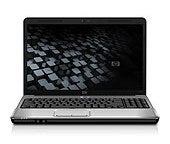
One of this year's most intriguing offers is a $197 HP laptop at Best Buy. Deal or no deal? We took a closer look.

That sounds awfully cheap. Is it a notebook or netbook?

The HP G60-507DX is a full-size laptop that weighs 6.6 pounds. It's certainly no bantamweight, but rather a luggable note. Its regular price is $550, so $197 is way cheap.

The CPU's probably a dog, right?

No. It's a 2.2GHz Intel Celeron 900 with an 800MHz front side bus and 1MB cache. That's a good chip, if a bit long in the tooth.

Vista or Windows 7?

Good news: Windows 7 Home Premium.

Is it underpowered?

Well, it won't be the fastest machine on the block, but it should handle basic tasks well. Key specs: 2GB DDR2 DIMM memory (expandable to 4GB) and a 160GB Serial ATA hard drive (7200 rpm). You'll want to add an extra 2 gigs of RAM to run Windows 7 better.

What about the graphics and display?

There's no discrete graphics processor for stellar performance, but rather the Intel Graphics Media Accelerator 4500M. The display is a 15.6-inch widescreen with 1366 x 768 resolution. Overall, not bad specs considering the sub-$200 price.

Blu-ray player?

Don't be greedy. There is an optical drive, though: DVD±RW/CD-RW unit with double-layer support.

Any bundled software?

Sure, the usual suspects: Microsoft Works, Cyberlink DVD Suite, Adobe Acrobat Reader, and a 60-day trial version of Microsoft Office Home and Student 2007.

So the HP G60-507DX is worth waiting in line for?

Yes, if you need a laptop, or know someone who does. This system has "student notebook" written all over it. It'd make a nice second PshoppingC for the home or office too.

Will I be able to get one?

That's questionable. Best Buy says it'll have a minimum of 5 of these laptops per store. Does that mean 5 per store . . . period? I guess we'll find out Friday morning.

Can I get it online instead?

Yes, if you're quick enough. According to Best Buy's Doorbuster 2009 ad, the HP laptop (and other specials) will be available online and in store while supplies last. Just how long they last is anyone's guess.

Contact Jeff Bertolucci via Twitter (@jbertolucci ) or at jbertolucci.blogspot.com .

soucre:PC World

»»  read more

Google and TiVo are teaming up for a new deal that'll put your clicking habits into the hands of advertisers. Before you grab the nearest "privacy violation" placard, though, check out the specifics of this arrangement -- it's probably far less invasive than what you're expecting.

Google and TiVo's Ad Data Deal

The Google-TiVo ad data deal, announced on Tuesday, is described as an "audience research agreement." In simple terms, TiVo will share anonymous viewing trends collected from its base of subscribers with Google. Google will use that data to help its advertisers understand who they're reaching -- and who they aren't -- when buying television ads through the company's AdWords TV Ads system.

"None of this is being used to actually target an individual," explains Google spokesperson Eric Obenzinger. "It's more about delivering more accurate reporting back to advertisers so they can inform their future budgeting decisions."

So what does the data actually include? First and foremost, absolutely nothing about who you are.

"When we say that this is all anonymous data, we mean that it is literally anonymous in the strictest definition of the term," says Todd Juenger, vice president & general manager of TiVo Audience Research & Measurement. "We don't collect anything about where it came from."

What TiVo does collect is a log of what commercials you watched and what commercials you skipped. It's like an advanced ratings system, taking TiVo's DVR functionality into account.

"We know that some set-top box out there pressed play on a certain network at a certain time -- then we know they hit fast-forward, hit pause, and hit play," Juenger says. "You do that across a million and a half set-top boxes, and you get a collective picture of what percentage of people were watching a certain commercial at a given time."

Google's TV Ad Platform

Unlike with Google's more widely discussed Web-based advertising platforms, the data collected by TiVo won't result in any information being tied to your account or any contextual ads popping up on your system. In fact, the program is actually no different from what Google was already doing within its TV Ads division.

As Google's TV Ads site explains, advertisers using the platform already had access to second-by-second data collected by set-top boxes. Up until now, Google's Obenzinger says, that data was collected solely through a partnership with Dish Network. With the new deal, TiVo's data will be combined with Dish's to give advertisers a more detailed picture.

So, that's the truth about the Google-TiVo advertising deal -- not quite as scary as some preliminary stories might have led you to believe. If you're still flying your "Google Is Evil" flag, though, fear not: The power to opt out is completely in your hands. Just head over to TiVo's Web site and sign in to your account to change your privacy preferences.

And for a detailed look at Google's other ad-related ventures, click over to "Inside Google's Advertising Empire." Your personal tour awaits.

JR Raphael is co-founder of geek-humor site eSarcasm. You can keep up with him on Twitter: @jr_raphael.

soucre:pcworld

»»  read more

Major magazine publishers are uniting to solve that old media dilemma of how to survive new media, rumor has it, and they'll soon be opening a joint storefront to peddle their digital wares. Time, Condé Nast, and Hearst are among the publishers who will participate in this iTunes-style magazine store, according to the Observer, but concrete details are scarce. Here's how I'm hoping it pans out:

Bring it to iTunes

Magazines are sold in grocery stores and bodegas, and even newsstands sell lots of other stuff, so why pen digital magazines into their own marketplace? Make the store an annex of larger, existing digital storefronts. Publishers could still sell digital magazines directly, but their content will be easier to stumble upon in places where people are already shopping.

Rethink the Content

Digital's a different world than print. Magazines can and should link out to relevant sites and articles -- even if they're not their own -- with built-in Web browsers. Reader comments should be encouraged, not feared. Multimedia should be abundant and easy to access. Ads could be retooled, but not in a way that makes them obnoxious.

Stop Worshiping Print

Old media traditionally loathes how new media cannibalizes print sales, but this new venture is the publishers' playground. The project will fail if print articles are withheld from the digital version in order to hang onto print subscribers.

Make Archives Easy

One of the best things about digital media is that you can store lots of it in a tiny package. Customers should have easy access to past purchases, even if the user deleted a copy and has to download it again. It'd be nice if longtime print subscribers could immediately access the backlog if they make the switch, and the text of all that content should be searchable.

Don't Get Greedy

Magazine subscriptions are dirt-cheap provided you use one of the discounts printed on inserts. Publishers should skip the tomfoolery and offer these rock-bottom prices -- I'm thinking 50 cents an issue for the New Yorker -- to annual subscribers. And here's another idea: Credit the price of a standalone "newsstand" copy toward the cost of a subscription should the reader decide to upgrade.

soucre:pcworld

»»  read more

By Mayumi Otsuma

Nov. 27 (Bloomberg) -- Japan’s consumer prices fell at a near record pace in October, reinforcing the government’s concern that deflation will hamper the economy’s recovery from its worst postwar recession.

Prices excluding fresh food slid 2.2 percent from a year earlier after dropping a 2.3 percent in September, the statistics bureau said today in Tokyo. That matched the median estimate of 26 economists surveyed by Bloomberg News.

Eight months of falling prices may intensify political pressure on the Bank of Japan to take action to combat deflation, which the government last week singled out as a threat to the world’s second-largest economy. Economic ministers said monetary policy should be used to bolster prices while central bank Governor Masaaki Shirakawa said providing more money alone won’t stimulate demand.

“The government’s declaration of deflation has made us pay much closer attention to price-related data,” said Mari Iwashita, chief market economist at Nikko Cordial Securities in Tokyo. “Discussions for further monetary steps will gain momentum and we can’t rule out the chance of more BOJ action.”

The yen’s advance to a 14-year high against the dollar may exacerbate deflation by pushing import costs lower, forcing domestic companies to cut prices to remain competitive. Japan’s currency traded at 85.52 per dollar at 8:35 a.m. in Tokyo from 85.76 before the report.

Bank of Japan

Bank of Japan policy makers last month predicted core prices will keep falling through fiscal 2011 even as the economy expands. Shirakawa has since said the central bank is committed to holding interest rates near zero to sustain the recovery. The bank’s board last week kept the benchmark overnight rate at 0.1 percent.

Falling wages and a deteriorating job outlook are discouraging spending by households and prompting companies to cut prices to attract customers and spur sales. Exports helped the world’s second-largest economy grow in the past six months after four straight quarters of contraction.

Winter bonuses among Japan’s largest companies will fall 15.9 percent in 2009, the biggest drop since the survey began in 1959, the Japan Business Federation said last month.

J. Front Retailing Co., Japan’s second-largest department store operator, and Seven & I Holdings Co., which runs the 7- Eleven chain, are among the companies selling generic-brand goods to appeal to consumers seeking cheaper merchandise.

Discount Retailing

“Even traditionally brand-conscious retailers are adding a low-price approach to their marketing arsenal,” said Kyohei Morita, chief economist at Barclays Capital in Tokyo. That could push core prices lower in coming months, he said.

The central bank says the pace of price declines will ease. Core prices will fall 0.4 percent in the year starting April 1, 2011, slower than the 0.8 percent decline for next fiscal year and 1.5 percent in the current period, it forecast on Oct. 30.

“Consumers are feeling deflation more than what government statistics suggest,” said Junko Nishioka, an economist at RBS Securities Japan Ltd. in Tokyo.

Prices of more than half of non-perishable foods and daily necessities such as toiletries fell in October from three months earlier, driven by discounts, the Nikkei newspaper reported on Nov. 20, citing a survey by its subsidiary.

“Price declines are penetrating through the economy so rapidly that government data is becoming incapable of grasping the real picture of deflation,” said Nikko Cordial’s Iwashita. “Retailers are being forced into discounting competition whether they like it or not, and I’m concerned that what we will eventually see is a shrinking economy.”

Tokyo Prices

Tokyo core consumer prices slumped 1.9 percent in November from a year earlier, today’s report showed. Figures for the capital city are released a month earlier than nationwide data, making them a harbinger of price trends.

Much of the drop in consumer prices reflects last year’s peak in oil costs. Crude has dropped more than 40 percent since it reached an unprecedented $147.27 a barrel last July.

Even though the oil effect will gradually wane in coming months and price declines will probably slow further, weakening demand will weigh on prices, said economist Yoshiki Shinke.

“Downward pressure from the demand factor will persist, and the timing for core prices to turn positive is still out of sight,” said Shinke, a senior economist at Dai-Ichi Life Research Institute in Tokyo. “We must assume deflation will linger for a long time.”

Consumer prices excluding energy and food, which economists say reflect demand in the economy more clearly, fell 1.1 percent in October from a year earlier.

To contact the reporter on this story: Mayumi Otsuma in Tokyo at motsuma@bloomberg.net

soucre: bloomberg

»»  read more